

The Fascia Fix


Karen Wells has spent decades helping people move out of pain. As a longtime bodywork educator who has taught at colleges and worked with corporate and dental offices, she often sees the same patterns walk through the door. Clients who can’t turn their heads, struggle to reach the floor or wake up feeling stiff. Her focus: how fascia shapes the way we move and feel. “Everything in the body is connected through fascia,” Wells says. “It runs head to toe, surrounding your muscles, bones, joints and organs. When you care for it, you support the body as a whole.”
Once overlooked, fascia is increasingly recognized as a highly innervated sensory tissue with over 250 million nerve endings, even more than your skin. Fascia plays a role in how we sense movement and pain and even sends signals to the vagus nerve, which helps regulate stress, inflammation and recovery.
“Fascia and the nervous system are deeply connected,” says Dedric Carroll, founder of Empirical Knead and a neuromuscular therapist with more than a decade of clinical research experience. “Changes in tissue tension, breathing patterns and sensory input can all influence how the nervous system responds.”
It’s Not Just Tight Muscles, It’s Tissue Behavior
If you’re feeling stiff or chronically tight, the issue may not be your muscles alone. Fascia moves by gliding between layers. When that glide is disrupted, movement becomes restricted and effortful. Research has linked reduced fascial mobility to stiffness and pain, particularly when inflammation is involved. Wells often traces that tightness back to dehydration within the tissue itself. “Any muscles that are tight are related to dehydrated fascia,” she says. “When it hydrates, it fills up with hyaluronan like a dried sponge.”
Hydration here goes beyond water intake. Fascia depends on movement, circulation and regular loading to stay elastic and responsive. Sedentary habits, shallow breathing and chronic stress can limit that fluid exchange, leaving tissue dense and less adaptable. “Tissue quality reflects what the body is experiencing day to day,” Carroll says, pointing to stress, breathing and movement patterns as key drivers.
How Fascia Connects to Stress, Pain and Recovery
Because fascia is woven throughout the body, its effects are not isolated. The vagus nerve responds to signals coming from tissues like fascia, meaning changes in movement, touch or tension can influence how the body regulates stress and recovery.
Carroll’s research shows that when fascia is stimulated through movement or gentle pressure, it can help shift the body toward a more balanced, parasympathetic state. Over time, that can ease tension, improve mobility and support overall regulation. Wells recommends starting simple and consistent. Gentle, daily input with a tennis ball can help restore movement and hydration to the tissue.
Karen Wells: linkedin.com/in/karenbwells, Dedric Carroll: empiricalknead.com
5 Easy Exercises to Stretch and Hydrate Fascia
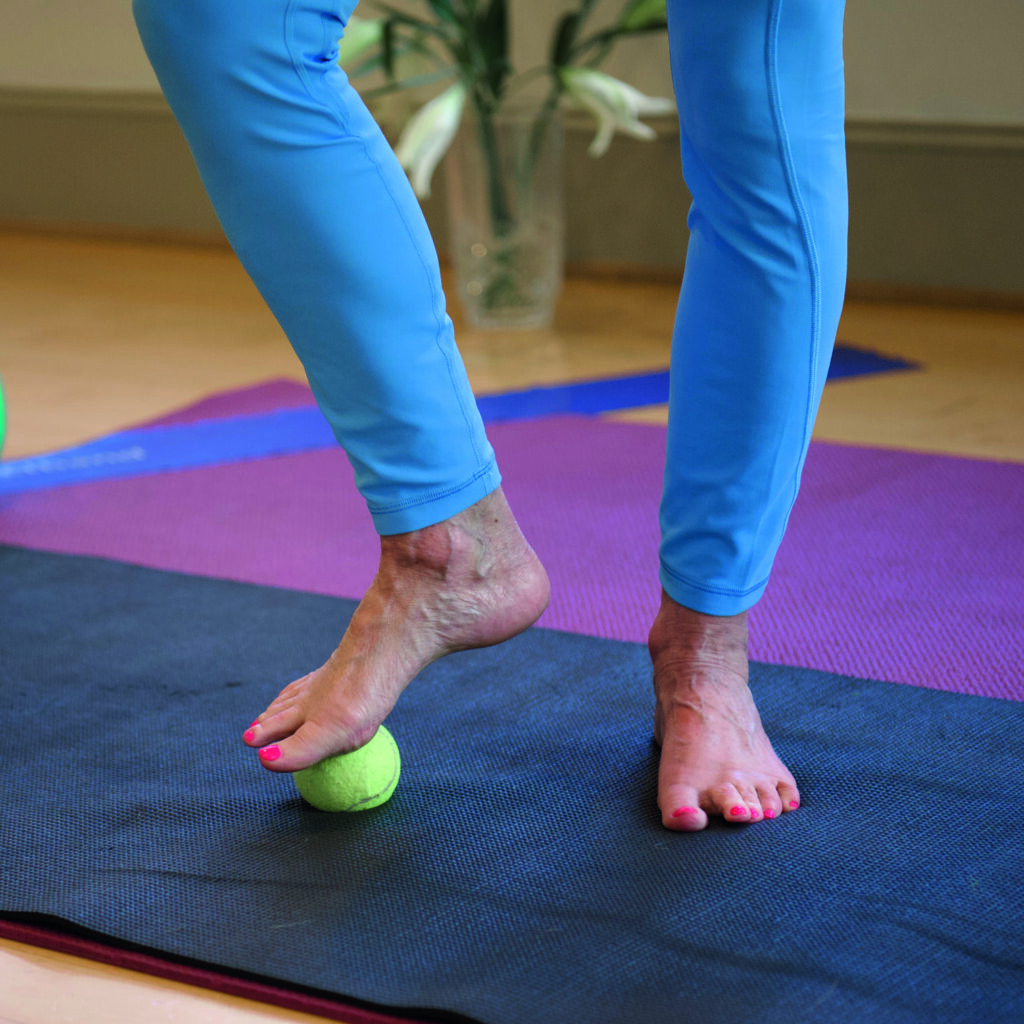 1. Foot Rolling
Roll a tennis ball under your foot with light pressure to stimulate the myofascial front, back and spiral lines in the whole foot.
2. Fold Over Legs ELDOA Stretch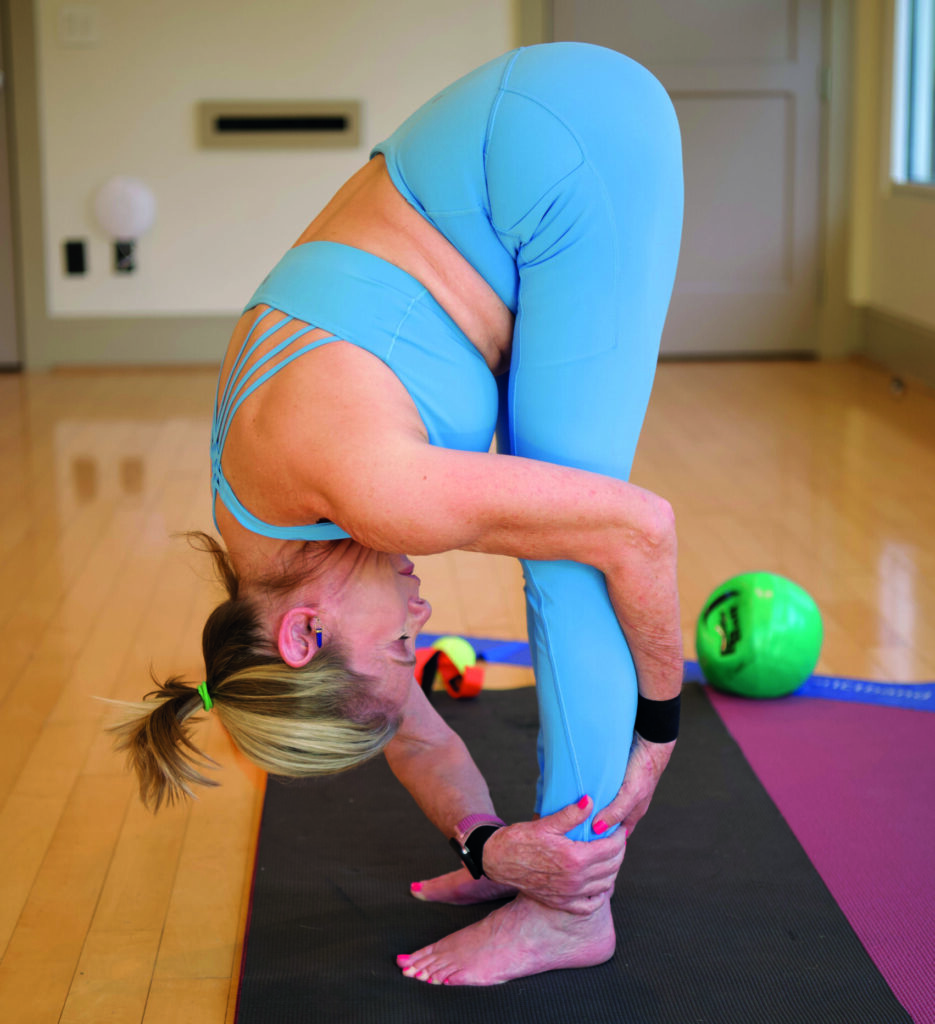
Fold over, reaching down toward your legs while lifting your sit bones to the ceiling. Create length in your spine, shoulders, hamstrings and hips.
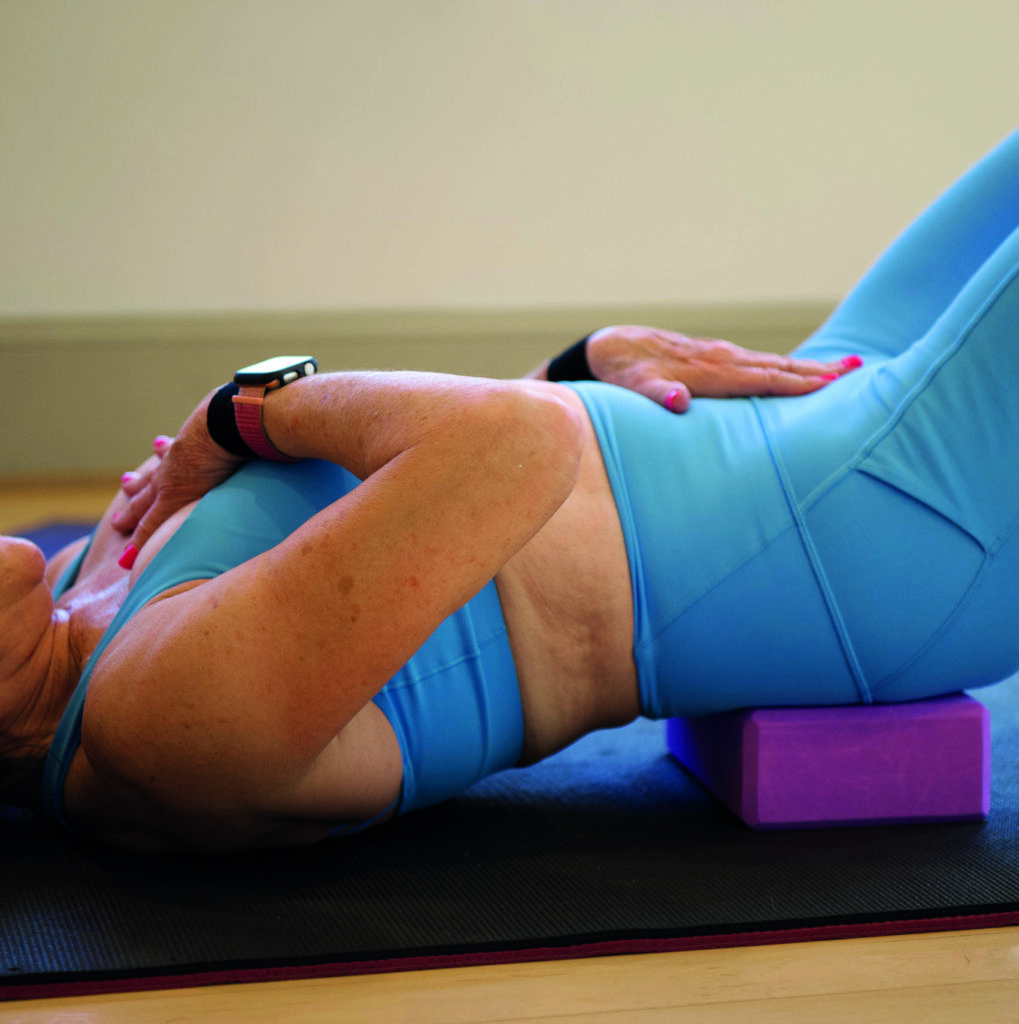 3. Supported Bridge
Lie back, lift hips and place a yoga block at the base of your spine. Place one hand on your sternum to draw ribs down; the other below your belly button to gently flatten and find a neutral pelvis.
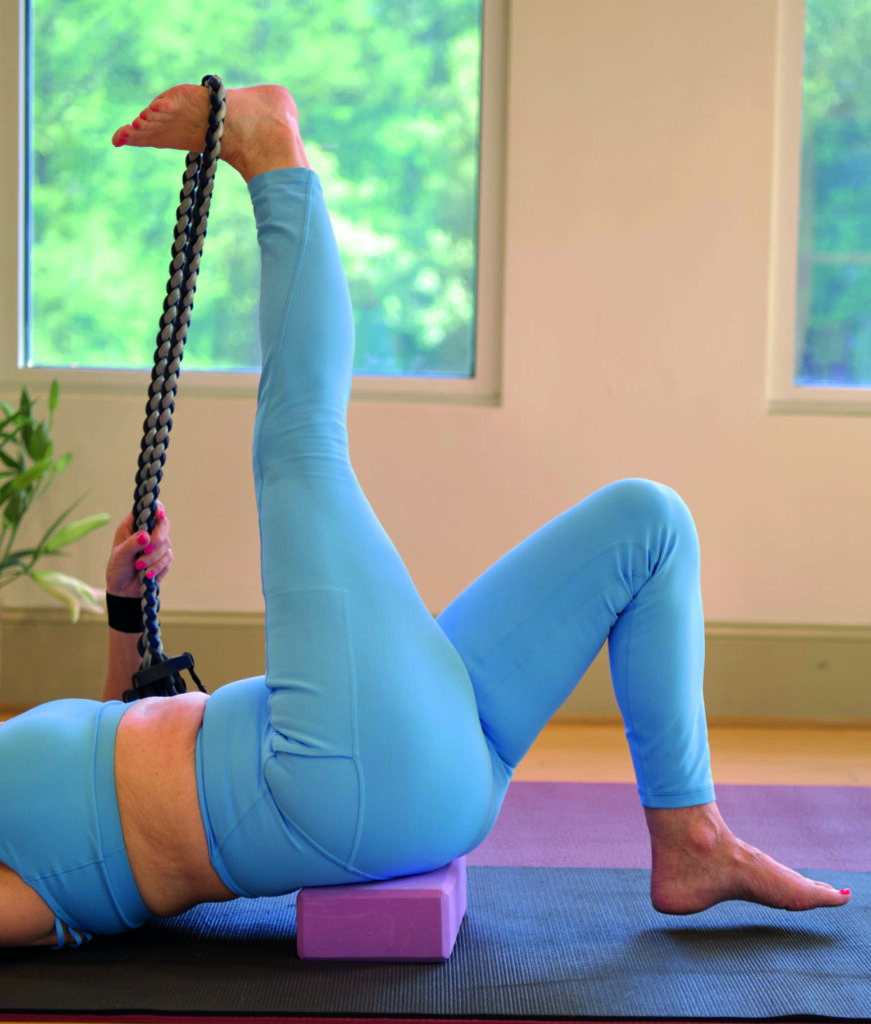 4. Fascial Side Stretch
With your low back supported on a yoga block, loop a band around your foot. Gently lift the leg, then guide it across your body, keeping ribs and pelvis grounded.
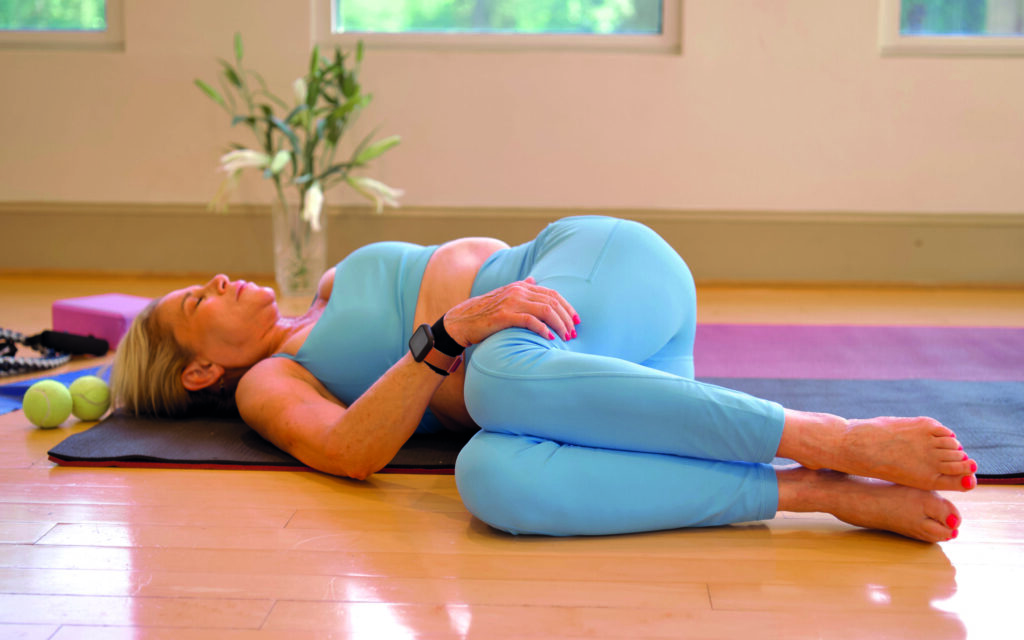 5. Supine Twist
Lie on your back, hug knees to chest, then slowly lower them to one side, keeping both shoulders grounded as much as possible. Breathe into the twist.