

Stayin’ Aligned: A Guide to Dancing Without Back Pain


By Krystal W. Chambers, MD
As a spine physician, I am often asked whether dancing is good or bad for the back. For most people, dancing is an excellent way to build endurance, coordination, balance and confidence. The spine is designed to move, but repeated turns, jumps, deep backbends and long rehearsals can overload muscles and joints when technique or conditioning falls behind the beat. The goal is not to fear movement—it is to help your back stay in rhythm.
Warm Up Before the Spotlight
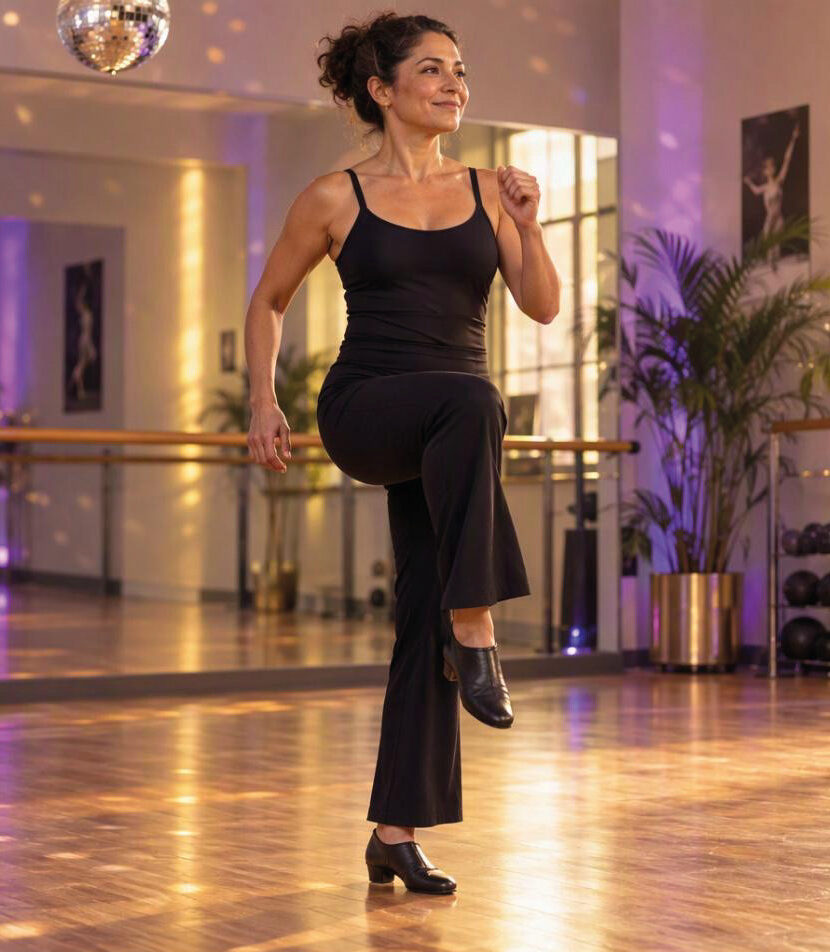
Start with several minutes of easy movement— walking, marching or gentle dance steps—to raise your heart rate. Then move through a comfortable range before attempting deep stretches, high kicks or backbends. I also recommend regular conditioning of the abdomen, back, hips and legs. Think of these muscles as an ensemble supporting the spine: when the hips and upper back share the choreography, the lower back does not have to dance every solo.
Let Technique Lead
Keep the spine long and controlled without stiffening every muscle or holding your breath. When bending, turning, or changing levels, distribute motion through the hips, knees, ankles and upper back rather than repeatedly hinging from one point in the lumbar spine. For lifts or partner work, get close, bend through the hips and knees, keep the weight of your partner near your body and pivot with your feet instead of twisting while lifting. Learn a new sequence slowly before adding speed, height or Saturday-night sparkle.
 Turn Up the Tempo Gradually
A sudden jump in rehearsal time or intensity is a common setup for back pain. Increase duration and difficulty in stages, vary your movement patterns and allow recovery after demanding sessions. Supportive footwear and a suitable floor can improve comfort and control, while worn shoes and repeated high-impact practice on hard surfaces may increase stress. Sleep, hydration and adequate nutrition are also part of the prescription—your spine cannot boogie on empty.
Know When to Step Off the Floor
Mild soreness after unfamiliar activity can be normal, but sharp, worsening or persistent pain should not be danced through. Stop the provoking movement and consult a medical provider, particularly after a fall or other injury. Seek urgent evaluation for new weakness or numbness in both legs, numbness around the groin or buttocks, loss of bladder or bowel control, fever, chest pain or rapidly worsening symptoms. Those are not “walk it off” signs. From a spine physician’s perspective, the best prevention plan is simple: prepare, strengthen, use sound technique, progress gradually and respond early when pain changes the picture. Back-friendly dancing is not cautious dancing—it is confident, sustainable movement that keeps you under the mirror ball for years to come.
 Krystal W. Chambers, MD, received her medical degree from Louisiana State University Medical Center in New Orleans, Louisiana. She completed her residency in Physical Medicine and Rehabilitation at The Graduate Hospital in Philadelphia, Pennsylvania and her Fellowship in Selective Spinal Injections and Non-Operative Spine Care at Georgia Pain Physicians, P.C. in Marietta, Georgia. Dr. Chambers is board- certified in Physical Medicine and Rehabilitation and currently serves as Co Medical Director of Resurgens Spine Center. Additionally, she is a member of the American Academy of Physical Medicine and Rehabilitation and Physiatric Association of Spine, Sports and Occupational Medicine. Dr. Chambers practices at the Resurgens St. Joseph’s/Sandy Springs location.
Resurgens Spine Center • Non-surgical & Surgical Spine Care 24 Convenient Atlanta Locations • www.ResurgensSpine.com

