

Healthy Hiking: How to Prevent Back & Neck Pain on the Trail


By Evan Reuter, MD
Georgia offers great hiking trails to enjoy year-round. As someone new to the Atlanta area, I am enjoying the sense of peace I feel when out in nature. The trees, water and the wildlife make for a relaxing and enjoyable hike. In this article, I’ll share a few tips I use to help prevent back and neck injuries while out on the trail.
Keep Your Muscles in Shape
Hiking itself is great exercise, but it’s important to prepare before you get out there. Walking on uneven surfaces you’ll find outdoors can be taxing on your legs and the core muscles that stabilize the spine and torso. Make sure you work out those muscles ahead of time. It doesn’t matter whether you’re hiking for a few hours or gearing up for a grueling, multi-day hike; preparing the muscles you’ll use will help prevent injury.
Stretch Before You Hike
Just because hiking is fun doesn’t mean it’s not a workout. And just like with any workout, it’s important to stretch beforehand. Hiking often involves bending and reaching as you move across uneven terrain. If you don’t stretch—especially your legs, glutes, neck and back—you could be increasing your risk of a painful pulled muscle that could leave you laid up for weeks. Stretching ahead of time helps keep your muscles limber and flexible, so you can enjoy your hike while lowering your risk of injury.
Choose The Right Gear
Whether you’re taking a nice afternoon hike or climbing a mountain, choosing the right gear is important. It all starts where the rubber meets the road—your boots. Hiking boots should be sturdy, with a thick sole and plenty of ankle support. Wearing the wrong footwear can lead to foot pain or even a twisted or broken ankle if you’re not careful. In addition, wearing the wrong boots can lead to back pain during and after your hike.
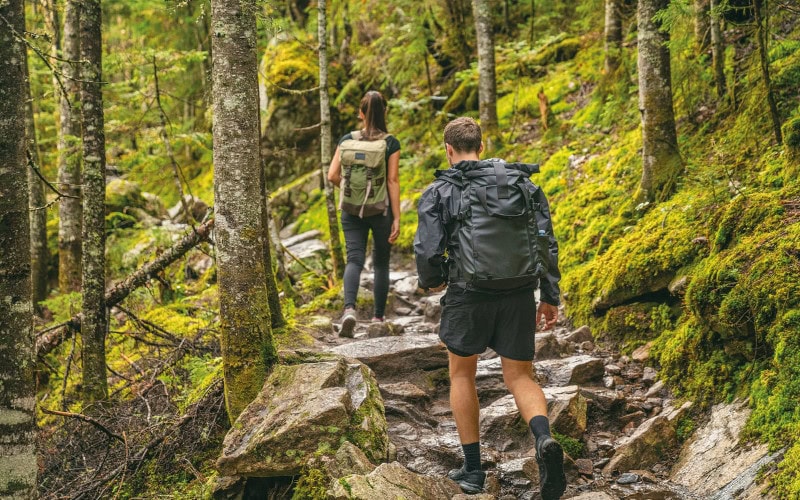
Choosing the right backpack is also important for preventing back and neck pain. Carrying gear and supplies can be hard on the spine if you don’t have a good backpack. Look for one that evenly distributes weight across your body. A good rule of thumb is that a fully loaded backpack should not weigh more than 20% of your body weight. This helps keep your back from doing all the work and can go a long way toward making your hike less tiring and more enjoyable.
I hope these tips are helpful as you get out and see all the beauty Georgia has to offer. If you experience neck or back pain after your hike that is not alleviated by home remedies, the physicians at Resurgens Spine Center are here to help you get back to doing what you love.
 Evan Reuter, MD, received his medical degree from Louisiana State University in New Orleans, Louisiana. While at LSU, he went on to complete his residency in Physical Medicine and Rehabilitation. He completed his fellowship in Pain Management at Ochsner Medical Center in New Orleans. Dr. Reuter is Board-Certified in Physical Medicine and Rehabilitation. Additionally, he is a member of the American Academy of Physical Medicine and Rehabilitation and practices at the Fayetteville Spine Center and Newnan locations of Resurgens Orthpaedics.
Resurgens Spine Center • Non-surgical & Surgical Spine Center
25 Convenient Atlanta Locations • Resurgens.com/Spine