

Gardening Without the Aches and Pains

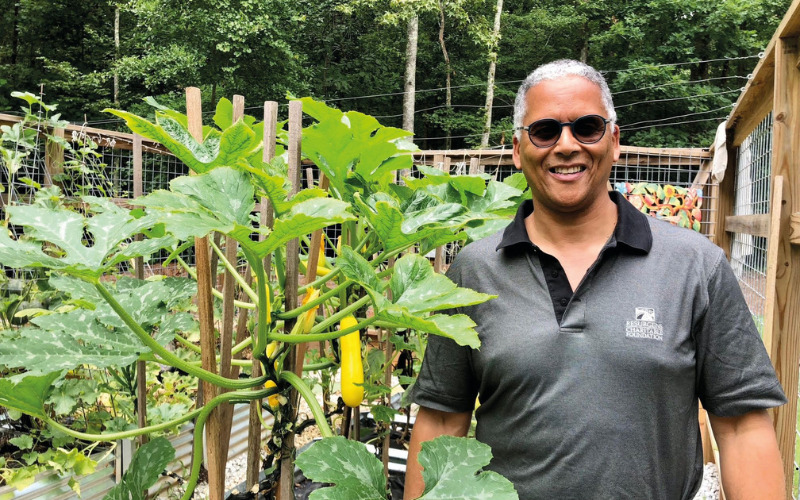

By Robert T. Greenfield, M.D.
Gardening is one of my favorite activities. It provides an escape from the stress of daily life, and there is something deeply satisfying about seeing vegetables you have grown served on your family’s table. For many of my patients, gardening is more than a hobby—it is a source of relaxation, physical activity and personal fulfillment. However, gardeners may engage in repeated postures that can trigger or worsen neck and back pain. As an Orthopaedic spine surgeon, I frequently see patients whose symptoms are aggravated by these activities. Fortunately, with proper technique and a few simple adjustments, you can continue gardening safely while protecting your spine.
Protect Your Spine in Ground-Level Gardens
Traditional ground-level gardening often involves prolonged bending at the waist, which places significant stress on the muscles, ligaments and spinal discs—particularly in the lower back.
To reduce this stress:
- Avoid bending forward at the waist whenever
possible. This position increases pressure
within the lumbar discs and can contribute to
muscle strain and disc injury. - Maintain a neutral spine posture. Keep your
back straight rather than rounded while working. - Use a squatting position instead of bending.
When rising, press through your heels and
engage your gluteal muscles. A helpful
technique is to slightly lift your toes off the
ground as you stand—this ensures your legs,
rather than your back, are doing the work. - Consider assistive devices such as gardening
stools or kneeler seats. These provide support,
improve posture, and significantly reduce strain
on the spine.
Using proper body mechanics in the garden is no different than using proper technique when lifting weights—your legs should do the work, not your back.
Consider Raised Beds and Container Gardening
Raised beds and container gardens are excellent options for reducing spinal strain. I personally use container gardening because it allows me to work at a comfortable height that limits repeated bending. The advantages include:
- Reduced need to bend forward
- Improved posture while working
- Less cumulative stress on the spine
When using containers, ensure they are positioned at a height that allows easy access without excessive reaching, twisting or leaning.
Grow Vertically to Minimize Bending
Vertical gardening is an effective way to reduce the physical demands of gardening while improving efficiency. Many vegetables grow well on trellises or supports, including:
- Cucumbers
- Tomatoes
- Squash
- Beans
- Melons
Growing vertically reduces the need to bend, makes harvesting easier and helps maintain a safer working posture.
Pace Yourself and Avoid Overuse
- Gardening often involves repetitive motions over extended periods, which can fatigue muscles and increase injury risk.
To reduce strain: - Take frequent breaks
- Alternate between tasks
- Avoid remaining in one position for prolonged
periods - Stop and rest if you begin to experience
discomfort
Pain is often an early warning sign that your spine is under excessive stress. Addressing discomfort early can help prevent more significant injury.
Continue Gardening Safely
Gardening provides physical activity, stress relief and a sense of accomplishment. With proper technique and thoughtful adjustments, most individuals can continue gardening safely and comfortably for many years. If you develop persistent neck or back pain that limits your ability to enjoy gardening or other daily activities, evaluation by a spine specialist may be appropriate. The goal of spine care is not simply to treat pain, but to help patients safely return to the activities that enhance their quality of life
 Robert T. Greenfield, M.D., received his medical degree and completed his residency in orthopaedic surgery at Howard University College of Medicine in Washington, D.C. He completed his fellowship in Adult Reconstructive Spine Surgery and Rehabilitation at Rancho Los Amigos Medical Center in Downey, California. Dr. Greenfield practices at Resurgens Orthopaedics’ Covington office.
Resurgens Spine Center • Non-surgical & Surgical Spine Car
25 Convenient Atlanta Locations • www.Resurgens.com/Spine